

The Summary
Mortgage transformation is often discussed in terms of platforms, architecture and automation. But implementing new technology is only part of the challenge. Successful transformation also depends on people, processes and how organisations work together.
Dudley Building Society’s mortgage transformation provides a practical example. Working with Ohpen, the Society has overhauled the environment in front of its core banking system, with the ambition of fundamentally transforming the experience for brokers and customers.
For Dudley, the programme is about more than implementing a new mortgage origination platform. It is about creating a better way of working — supported by better access to information, more connected processes and close collaboration between the teams delivering the transformation.
*Featuring James Paterson, CEO of Dudley Building Society
Transforming the experience, not just the technology
Mortgage lending involves multiple teams, significant amounts of information and a series of interconnected processes. Changing the technology that supports those processes creates an opportunity to look more broadly at how the mortgage journey works.
That was central to Dudley Building Society’s approach. Rather than treating the project simply as a system replacement, the Society set out to transform the experience for brokers and customers, overhauling the technology environment in front of its core banking system.
For brokers, Dudley expects the new approach to support faster decisions, smoother processes and better visibility of cases. For employees, better access to workflow and data is expected to help teams become more responsive, improve communication and support faster turnaround times.
The distinction matters. The value of modern mortgage technology is not simply that a new platform has been deployed. It lies in what that technology enables people to do differently.
Hear from Dudley Building Society
James Paterson, CEO of Dudley Building Society, shares his perspective on the mortgage transformation, what it means for brokers, customers and employees, and the experience of working with Ohpen.
People make transformation work
Technology may provide the foundation, but transformation still has to be delivered by people.
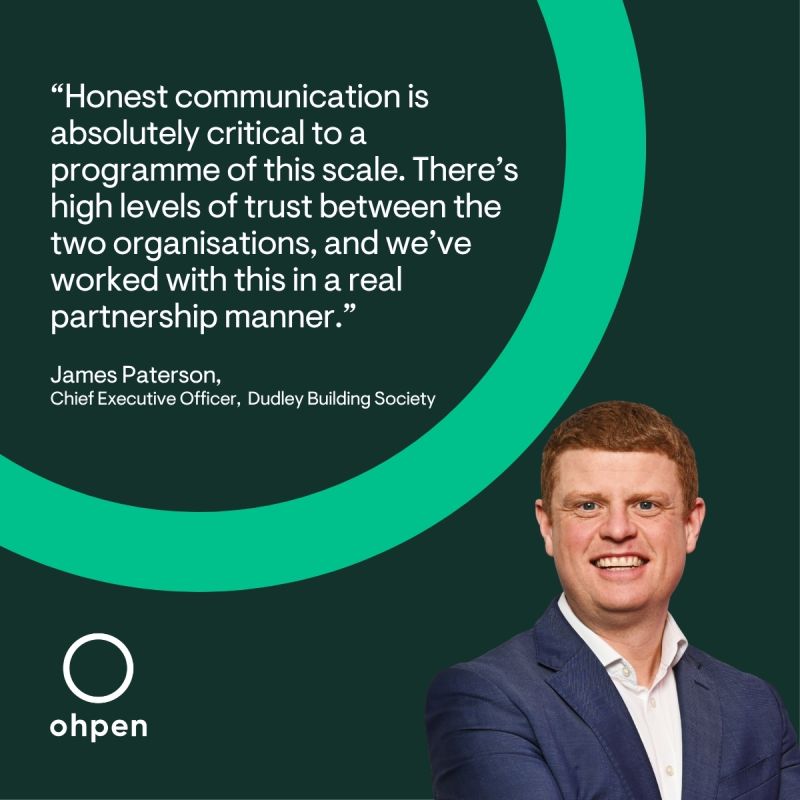
Large transformation programmes inevitably require teams to work through complex decisions and challenges. For Dudley and Ohpen, honest communication and open conversations were an important part of that process.
James Paterson highlights the level of trust established between the two organisations and the importance of being able to challenge one another constructively. Rather than simply working towards the deployment of a piece of technology, the teams needed to remain aligned around what the programme was intended to achieve.
That collaborative approach also creates space for continuous improvement. Requirements can evolve, assumptions can be challenged and problems can be addressed openly rather than becoming barriers to progress.
Better operations start with better visibility
One of the recurring challenges in mortgage operations is ensuring that the people involved in a case have access to the information they need.
Better visibility across mortgage cases, workflows and data can support more effective communication and decision-making. It can also reduce the time employees spend navigating fragmented processes and allow them to focus more attention on brokers and customers.
These are important elements of Dudley’s transformation. The Society expects greater access to workflow and data to help its people become more responsive, while brokers benefit from greater case visibility, smoother processes and faster decisions.
Ultimately, operational improvements matter because of the experience they create. A more connected mortgage operation can make it easier for employees to do their jobs and for brokers and customers to navigate the mortgage journey.
Partnership is part of the transformation
The Dudley experience also highlights another aspect of technology transformation that can be overlooked: the relationship between the organisations delivering it.
Implementing a mortgage platform requires more than handing over requirements to a technology provider. Both sides need to make decisions, resolve issues and adapt as the programme develops.
James describes the relationship with Ohpen in terms of trust, honest communication and alignment, with both organisations able to challenge each other while working towards the success of the programme.
That changes the role of a technology provider. Instead of simply supplying software, successful delivery depends on both organisations working together around a shared objective.
What can mortgage lenders take from Dudley’s experience?
Dudley Building Society’s transformation reinforces a simple point: modernising mortgage technology and transforming a mortgage operation are not the same thing.
A modern platform can provide the technology required to connect processes, information and workflows. But real transformation also requires organisations to consider how their people will use that technology, how existing processes should change and how everyone involved in the programme will work together.
For mortgage lenders considering their own modernisation journey, the technology decision remains important. But so do the conditions around it: clear objectives, organisational alignment, open communication, trust and a willingness to challenge existing ways of working.
Technology enables the transformation. People and partnership turn it into meaningful change.